2013 • Chadwick Boseman, Harrison Ford
Summary
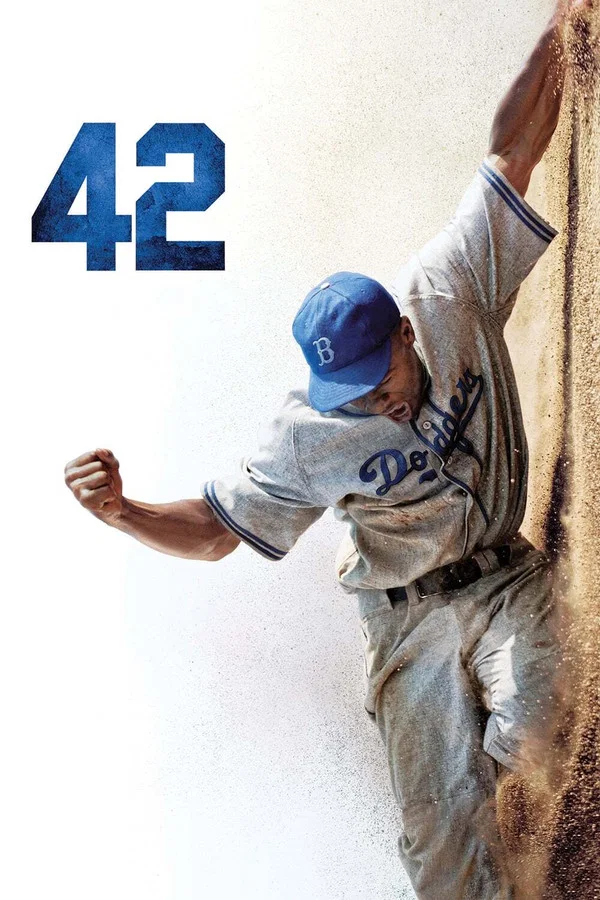
42 tells the story of Jackie Robinson’s historic entry into Major League Baseball in 1947, as he breaks the color barrier with the Brooklyn Dodgers under the guidance of general manager Branch Rickey.
Dramatizations & Historical Liberties
1. The Pee Wee Reese arm-around-the-shoulder moment
The film’s iconic scene in Cincinnati where Reese publicly puts his arm around Robinson to show support is based on a popular legend. In reality, the moment is widely disputed by historians and likely never happened as depicted — any solidarity developed more gradually and subtly over time.
2. Heightened racial confrontations
The frequency and viciousness of on-field taunts, slurs, and direct confrontations (including from opposing players like Ben Chapman) are significantly amplified. While racism was very real and brutal, many specific incidents were combined, exaggerated, or invented for dramatic intensity.
3. Teammate resistance and the petition against Robinson
The movie shows relatively quick acceptance by most Dodgers players. In reality, a group of Southern players circulated a petition against Robinson joining the team, and open resistance from some teammates lasted longer and was more intense than portrayed.
4. Mentorship conversations with Branch Rickey
The key mentorship scenes between Robinson and Dodgers executive Branch Rickey are based on real events but were heavily dramatized. This includes the famous “God is testing you” speech and other motivational conversations, which were condensed and given more theatrical dialogue.
Related