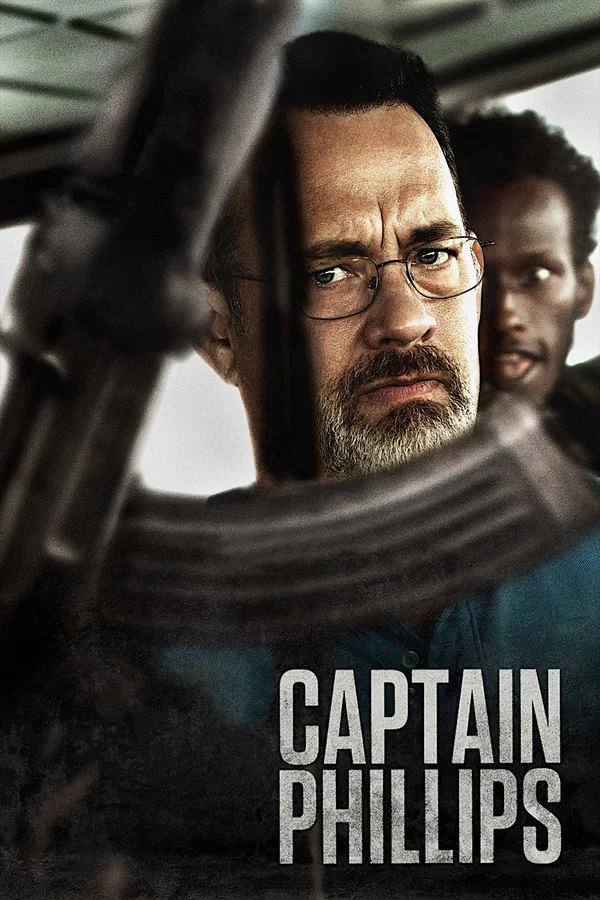
2013 • Tom Hanks, Barkhad Abdi
Summary
Captain Phillips recounts the 2009 hijacking of the American cargo ship Maersk Alabama by Somali pirates. Captain Richard Phillips and his crew are taken hostage in one of the most brazen modern piracy incidents, leading to a tense four-day standoff resolved by a dramatic U.S. Navy SEAL rescue.
Dramatizations & Historical Liberties
1. Phillips’ leadership and composure
Tom Hanks portrays Captain Phillips as exceptionally calm and heroically self-sacrificing. While he showed real courage, the real Phillips experienced significant fear and made some panicked decisions. The film amplifies his composure and adds several dramatic “movie hero” moments.
2. Portrayal of the Somali pirates
The film gives the pirates surprising depth and humanity. While rooted in reality, much of their dialogue, backstories, and emotional states are dramatized or simplified to heighten tension.
3. Crew actions and resistance
The crew’s coordinated resistance and hiding in the engine room are based on real events, but the movie significantly heightens the level of organized action and adds extra suspenseful close calls.
4. The Navy SEAL rescue operation
The climactic rescue is depicted with high realism, but several tactical details, timing, and radio communications were adjusted for dramatic effect and visual clarity.
5. Emotional aftermath and trauma
The final scenes powerfully convey Phillips’ shock and trauma. While accurate in spirit, some emotional beats are dramatized for a stronger, more cathartic audience experience.
Related