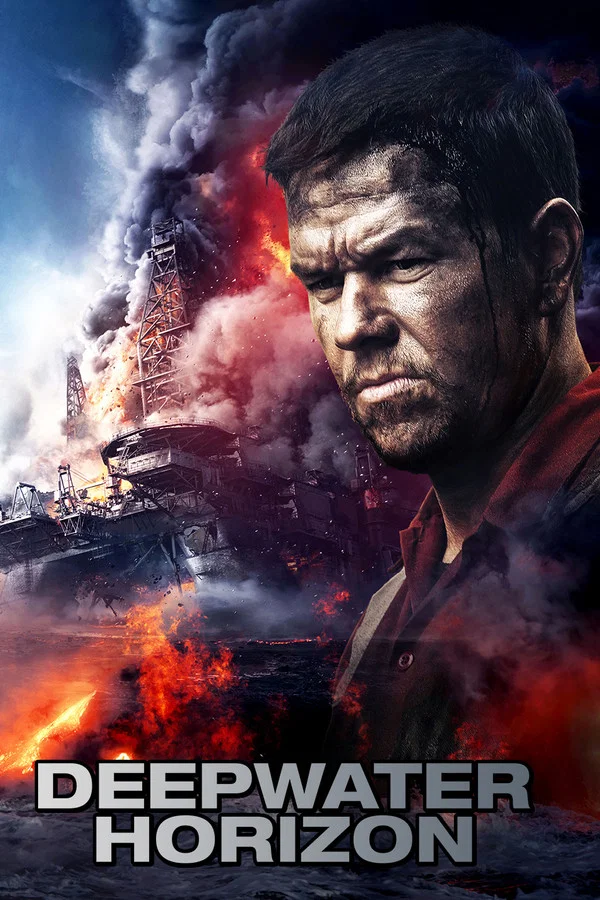
2016 • Mark Wahlberg, Kurt Russell
Summary
On April 20, 2010, the Deepwater Horizon oil rig in the Gulf of Mexico suffered a catastrophic blowout and explosion that killed 11 workers and triggered the largest marine oil spill in U.S. history. The film focuses on the rig crew’s desperate struggle for survival as multiple safety systems failed and the platform became an inferno.
Dramatizations & Historical Liberties
1. Simplification of the technical failures and blame
The film focuses heavily on BP executives (especially Donald Vidrine) ignoring warnings and making reckless decisions. While it does highlight BP’s risky well design, the misinterpretation of the negative pressure test, and Halliburton’s unstable cement job, it still simplifies the disaster into a story of a few villainous individuals at BP. In reality, the blowout resulted from deep systemic failures across BP, Transocean, and Halliburton — including poor decision-making, inadequate oversight, ignored safety protocols, and maintenance issues at multiple levels.
2. Heightened confrontations between crew and executives
The movie dramatizes multiple intense, emotional shouting matches between rig workers and BP management. While crew members did raise serious safety concerns — particularly around the negative pressure test — real interactions were generally more technical, procedural, and conducted through formal channels rather than theatrical confrontations.
3. Amplification of Mike Williams’ heroics
Mark Wahlberg’s character (based on real crew member Mike Williams) is portrayed as the primary hero with several standout dramatic actions. While Williams was genuinely courageous and played a key role in the evacuation, the film combines events from multiple crew members and exaggerates some of his individual contributions for cinematic effect.
4. Compression of warning signs before the explosion
The film compresses the critical hours of escalating problems — including repeated well kicks, abnormal pressure readings, and the failed negative pressure test — into a shorter, more urgent sequence. In reality, these warning signs developed over a longer period and were repeatedly dismissed or misinterpreted.
5. Personal trauma and emotional arcs
The movie intensifies the immediate psychological toll on survivors, including nightmares, self-doubt, and family strain. While the trauma was real and profound for many, some individual emotional journeys and family interactions are condensed, combined, or dramatized for greater emotional impact.
Related
