2025 • Russell Crowe
Summary
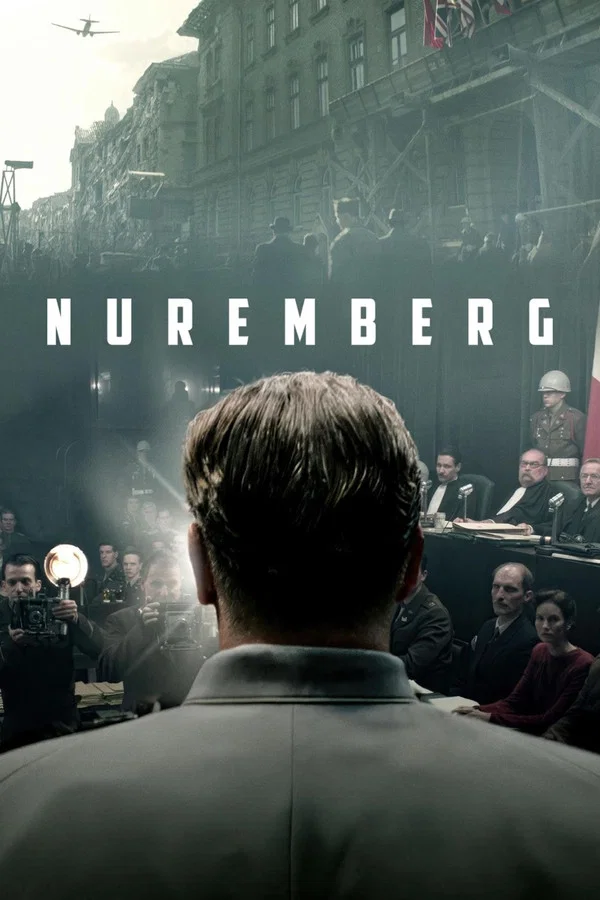
Nuremberg dramatizes the 1945–1946 International Military Tribunal, focusing on U.S. Army psychiatrist Douglas M. Kelley’s psychological evaluations of the Nazi defendants — most notably his intense interactions with Hermann Göring. The film explores the Allies’ historic effort to deliver justice after the Holocaust and World War II through the first major international war crimes trials.
Dramatizations & Historical Liberties
1. Dramatized and intensified relationship between Dr. Kelley and Hermann Göring
The film portrays frequent, highly charged psychological duels between Kelley and Göring. In reality, while Kelley did evaluate Göring extensively, their interactions were more clinical and professional than the personal, cat-and-mouse confrontations shown on screen.
2. Invented or heavily fictionalized private conversations
Many key dialogues are invented or significantly altered, including private strategy sessions between Kelley and Göring, emotional exchanges with other defendants, and conversations involving prosecutors and judges that did not occur in the documented record.
3. Heightened courtroom drama and emotional confrontations
Several courtroom scenes and interactions among the defendants are made more theatrical and emotionally charged than the often formal and procedural nature of the real trial transcripts.
4. Simplification of legal and political complexities
The intricate legal debates over creating the tribunal, disagreements among the four Allied powers (especially regarding the charge of “crimes against peace”), and the political maneuvering behind the scenes are heavily simplified for dramatic clarity.
5. Romanticized or idealized portrayal of key figures
The complex personalities and motivations of defendants like Hermann Göring and Albert Speer are simplified and given clearer dramatic arcs than the deeply contradictory historical figures they actually were.
Related