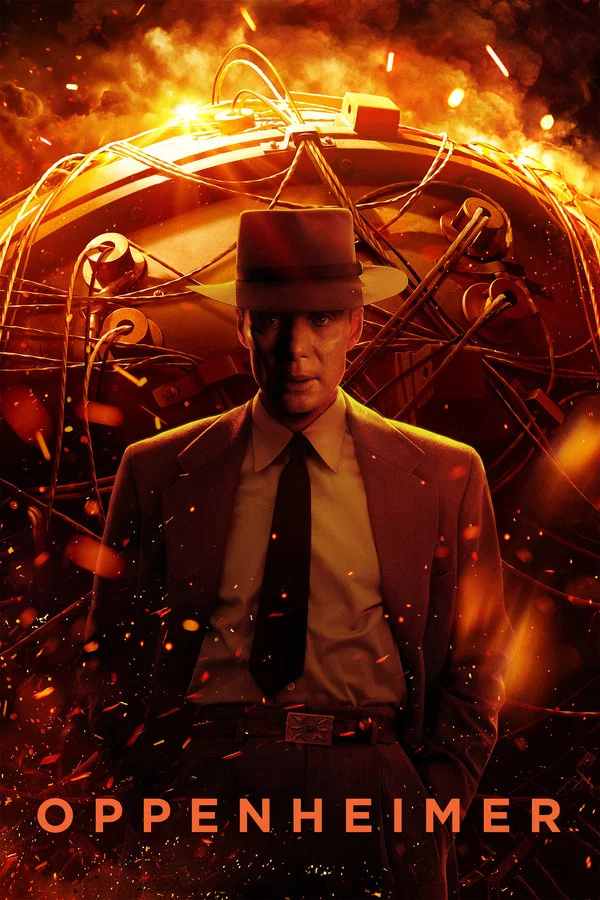
2023 • Cillian Murphy
Summary
Christopher Nolan’s Oppenheimer is a sweeping biographical drama about J. Robert Oppenheimer, the brilliant physicist who led the Manhattan Project and developed the atomic bomb. Drawing heavily from the Pulitzer Prize-winning book American Prometheus, the film explores Oppenheimer’s scientific genius, his deep moral torment, the intense pressure at Los Alamos, and the political persecution he faced during the 1954 security hearing that ultimately destroyed his reputation and career.
Dramatizations & Historical Liberties
1. The pond conversation with Einstein
The film features a pivotal, recurring conversation between Oppenheimer and Albert Einstein by a pond. This scene is entirely invented. While the two men did know each other, no such private, philosophically charged conversation ever took place.
2. Private and emotional dialogues
Many of the film’s most emotionally charged private conversations — especially between Oppenheimer and his wife Kitty, and with other scientists — were written or significantly rewritten by Nolan for dramatic effect. While based on real personalities, much of the specific dialogue is fictional.
3. Compressed timeline and exaggerated Strauss vendetta
The film heavily compresses the timeline, combines multiple real events, and shifts key meetings for pacing. It also dramatically exaggerates Lewis Strauss’s personal vendetta against Oppenheimer, turning a complex political and bureaucratic conflict into a more personal, cinematic rivalry.
4. Fictionalized private moments with Kitty Oppenheimer
The portrayal of Oppenheimer’s marriage includes several invented or heavily exaggerated private arguments and emotional confrontations with Kitty. While their relationship was genuinely troubled, the film takes notable liberties with specific interactions for dramatic intensity.
5. Heightened drama around the Trinity test
The Trinity test sequence is powerfully staged but includes added tension, visual flair, and dramatic beats (including exaggerated reactions) that did not occur. The real test was a high-stakes scientific event, but the film amplifies the atmosphere of dread and personal stakes.
Related


