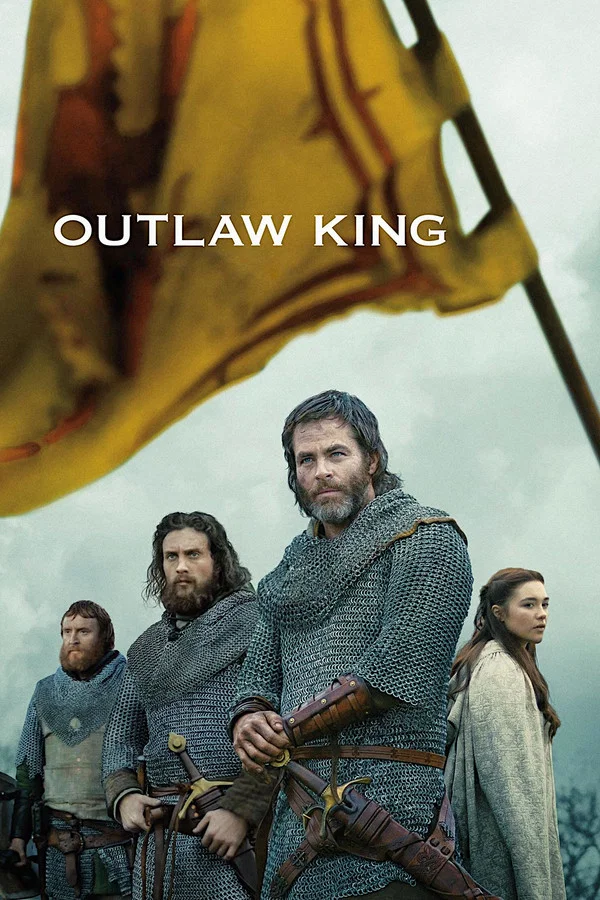
2018 • Chris Pine, Florence Pugh
Summary
Outlaw King follows Robert the Bruce as he claims the Scottish crown in 1306 and launches a brutal guerrilla war against Edward I of England to secure Scottish independence.
Dramatizations & Historical Liberties
1. Portrayal of Robert the Bruce
The film portrays Bruce as a principled hero who turns against England out of clear moral conviction early on. In reality, he had previously sworn loyalty to Edward I multiple times and only rebelled after careful political calculation when he saw an opportunity to seize power.
2. Romance with Elizabeth de Burgh
The movie depicts a passionate, supportive romance between Robert and Elizabeth. In reality, their marriage was primarily a strategic political alliance. Elizabeth was captured by the English shortly after Robert’s coronation and held prisoner for eight years, during which Robert had almost no contact with her.
3. Heroic combat scenes
The film features multiple dramatic one-on-one duels and personalized last-stand moments for Robert and his inner circle. In reality, medieval battles were large-scale, chaotic group engagements involving hundreds or thousands of soldiers fighting in tight formations. The highly choreographed, individualized heroics shown in the film are largely invented for dramatic effect.
4. Robert’s early military success
The film suggests Robert quickly regains momentum through bold leadership and decisive victories. In reality, after his coronation he suffered several major defeats, was forced into hiding, and spent years conducting small-scale guerrilla warfare before slowly rebuilding his support.
5. Path to Scottish independence
The film implies Robert’s campaign was a relatively straightforward fight for freedom that rapidly turns the tide. In reality, the struggle for independence was long and difficult, marked by deep internal divisions among Scottish nobles, shifting alliances, and continued English counter-offensives that lasted for decades after the events shown.
Related
