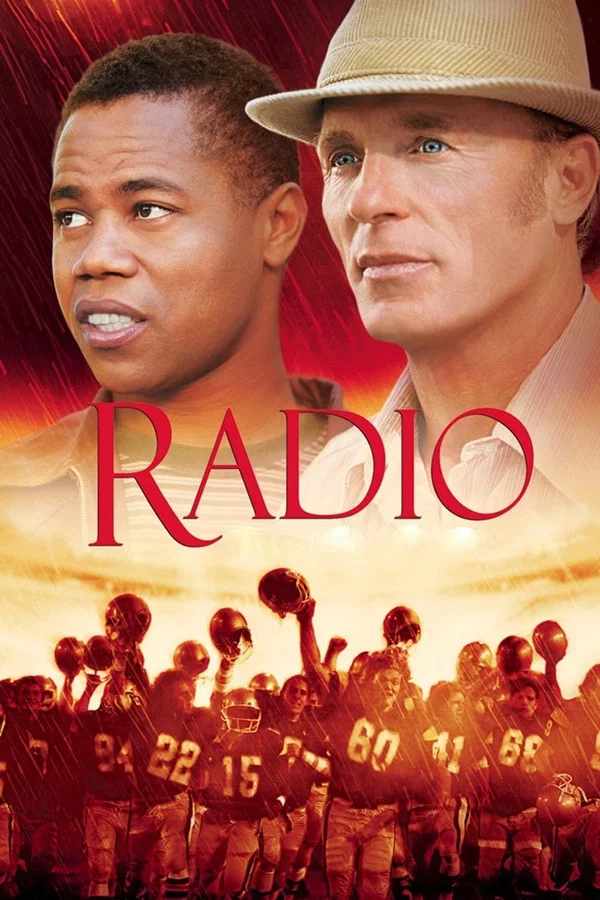
2003 • Cuba Gooding Jr., Ed Harris
Summary
Radio tells the story of James Robert Kennedy, a mentally disabled man in Anderson, South Carolina, who forms an unlikely friendship with high school football coach Harold Jones and becomes a beloved team fixture.
Dramatizations & Historical Liberties
1. Town hostility and bullying
The film shows Radio being frequently mocked, locked in a shed, and treated as an outcast by the entire town. In reality, while some teasing occurred, Radio was already well-known and generally well-liked in the community before Coach Jones got involved.
2. Family dynamics
The movie creates significant conflict between Radio and his mother, including emotional confrontations and neglect. In reality, Radio had a close and loving relationship with his mother, who cared for him devotedly until her death.
3. Football team integration
The film portrays the players as initially hostile toward Radio and needing to be won over. In reality, the team accepted him quite quickly and he became a regular, welcomed presence at practices and games.
4. Coach’s personal and professional risk
The movie shows Coach Jones repeatedly risking his job and reputation by standing up for Radio against strong community opposition and threats from school board members. In reality, while Jones advocated for Radio, there was relatively little serious backlash or job threat — most of the town supported the relationship.
5. Triumphant ending
The film ends with Radio fully embraced by the town and happily integrated into school life. In reality, Radio continued to face daily challenges related to his intellectual disability, required ongoing support, and his life remained far more complex and difficult than the feel-good conclusion suggests.
Related