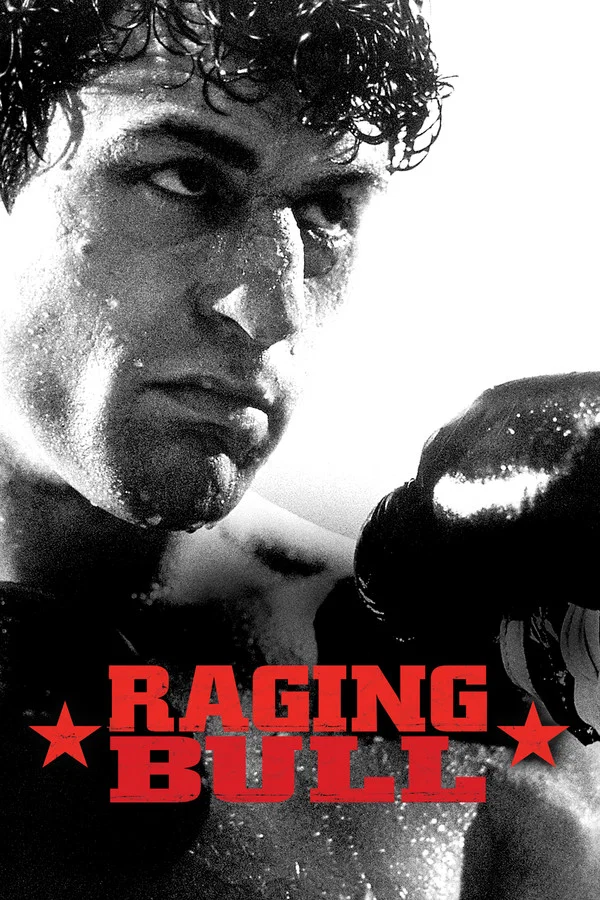
1980 • Robert De Niro, Joe Pesci
Summary
Raging Bull is a portrait of middleweight boxing champion Jake LaMotta. The film follows his ferocious rise in the 1940s, his paranoid jealousy, violent temper, self-destructive behavior, and eventual decline both inside and outside the ring. It intensifies LaMotta’s brutality and self-loathing, compresses timelines, and takes notable artistic liberties for dramatic and stylistic effect.
Dramatizations & Historical Liberties
1. Extreme paranoia and self-destructive violence
The film portrays LaMotta as almost pathologically paranoid and violently self-destructive in nearly every aspect of his life. While he was known for a volatile temper, many of the most brutal outbursts and self-sabotaging moments were significantly intensified by Scorsese and De Niro for psychological depth.
2. The explosive rift with brother Joey
The savage physical fight between Jake and his brother Joey, followed by their total estrangement, is dramatized with raw intensity. While a real falling out occurred, the film heightens the violence and finality of the scene for maximum emotional impact.
3. Severe compression of LaMotta’s boxing career
LaMotta’s long professional career (over 100 fights spanning more than a decade) is heavily condensed. The film presents a much faster and more continuous downward spiral than the more gradual real-life progression of wins, losses, and personal decline.
4. Heightened domestic jealousy and abuse toward Vickie
LaMotta’s obsessive jealousy and controlling behavior toward his wife Vickie are shown through multiple intense, accusatory confrontations. While jealousy was a genuine issue in their marriage, many of the specific explosive scenes were dramatized or invented.
5. Stylized violence and post-career decline
The graphic final beating by Sugar Ray Robinson and LaMotta’s later years as a nightclub owner and comedian are depicted with extreme slow-motion brutality and immediate desperation. In reality, both the fight and his post-boxing decline were more gradual and complicated than shown.
Related