2003 • Tobey Maguire, Jeff Bridges
Summary
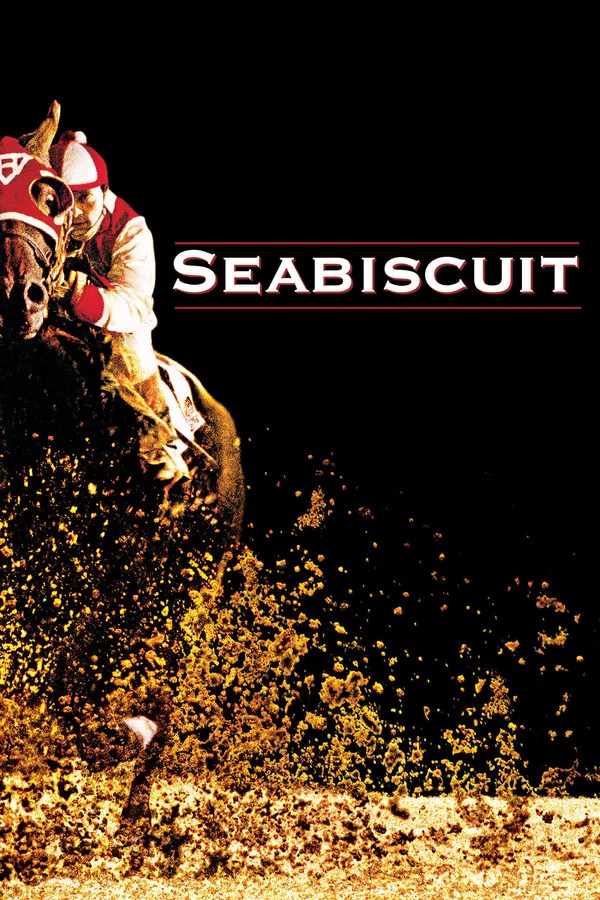
Seabiscuit is a Depression-era drama that tells the true story of an undersized, temperamental Thoroughbred who became an unlikely American icon. Bought by automobile tycoon Charles Howard, trained by the intuitive former cowboy Tom Smith, and ridden by the resilient, half-blind jockey Red Pollard, the horse rose from obscurity to challenge the mighty War Admiral in a legendary 1938 match race.
Dramatizations & Historical Liberties
1. Significant timeline compression
The film condenses several years of Seabiscuit’s racing career (1936–1938) and recovery periods into a tighter, more dramatic narrative. Many important races, training montages, and setbacks are shortened or combined for pacing and emotional flow.
2. Red Pollard’s personal struggles and injuries
The film portrays Red Pollard’s difficult life in rich detail — his rough boxing background, near-total blindness in one eye, and especially his devastating leg injury that nearly ended his career. While these hardships are rooted in truth, the movie heightens the emotional intensity, timing, and personal drama of his physical and emotional pain to deepen audience sympathy and strengthen his character arc.
3. The legendary match race against War Admiral
The 1938 Pimlico Special match race is recreated with high cinematic energy and dramatic flair. The film adds extra tension through close-up shots, strategic race positioning, and heightened stakes that go beyond the actual historical footage, making the underdog victory feel even more triumphant and emotionally charged.
4. Character relationships and composites
The profound bond between Charles Howard, Tom Smith, Red Pollard, and Seabiscuit is beautifully emphasized and occasionally romanticized. Several supporting characters — including stable hands, journalists, and other racing figures — are composites or have their roles merged and amplified to serve the central trio’s emotional journey and create stronger dramatic connections.
5. Seabiscuit’s early career and “lazy” reputation
The movie exaggerates Seabiscuit’s early reputation as a slow, stubborn, and seemingly worthless horse to create a more powerful underdog transformation. In reality, while he was inconsistent and often overlooked, he showed occasional promise earlier than the film suggests, and his improvement under Tom Smith was more gradual than the dramatic turnaround portrayed.
Related