2010 • Diane Lane, John Malkovich
Summary
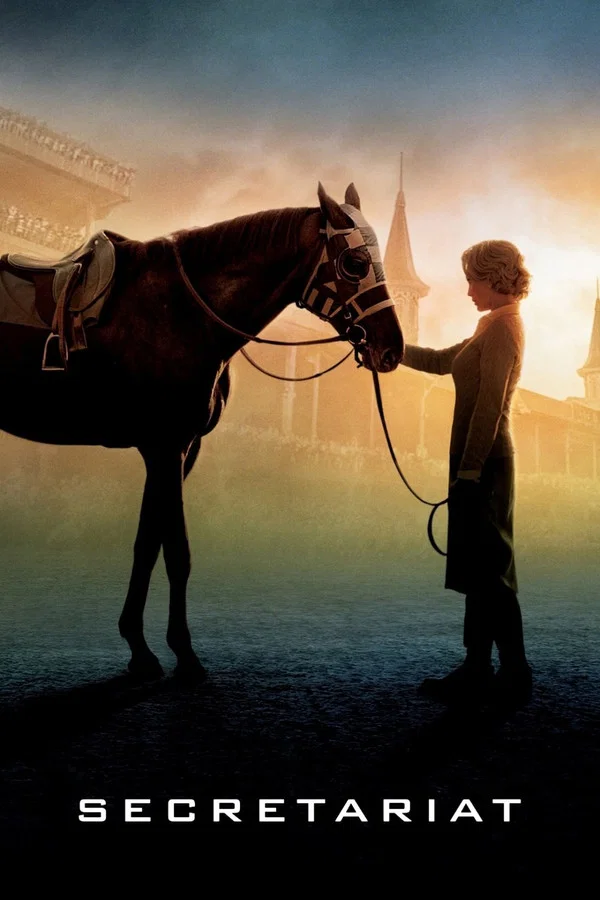
Secretariat tells the story of the legendary 1973 Triple Crown champion and the resilient woman who believed in him. When her father becomes ill, Penny Chenery takes over the failing Meadow Farm, hires trainer Lucien Laurin, and nurtures Secretariat — a massive, powerful colt — to become one of the greatest racehorses in history, culminating in his record-shattering Belmont Stakes victory.
Dramatizations & Historical Liberties
1. Penny Chenery’s Struggle for Control of the Farm
The film dramatizes Penny’s fierce struggle against her brother Hollis and other skeptical shareholders who wanted to sell the Meadow Farm. While she did have to fight hard to maintain control after her father’s stroke, the movie heightens the personal confrontations, financial desperation, and sense of betrayal for dramatic tension. In reality, the family dynamics were complex but less overtly hostile than portrayed.
2. Lucien Laurin’s Gruff Personality
John Malkovich’s portrayal of Lucien Laurin as a constantly grumpy, skeptical, and reluctant trainer is highly entertaining but significantly exaggerated. In reality, Laurin was a seasoned, respected trainer who, after initially being cautious due to Secretariat’s size and awkward movement as a yearling, quickly recognized the horse’s extraordinary talent and became one of his strongest believers.
3. Timeline Compression of the 1973 Season
The film significantly compresses the entire 1973 racing calendar. In reality, Secretariat’s path to the Triple Crown involved multiple important prep races, gradual physical development, and strategic training decisions over several months. The movie condenses this long, methodical journey — including key races between the Kentucky Derby, Preakness, and Belmont — into a much shorter and more intense sequence for dramatic pacing.
4. Secretariat’s Early Career and “Ugly Duckling” Story
The film leans heavily into the “ugly duckling” narrative, suggesting Secretariat was largely overlooked in his early years. In truth, although he was a big, somewhat clumsy yearling, his exceptional pedigree as the son of Bold Ruler out of Somethingroyal created considerable anticipation in racing circles from the very beginning. He entered training with high expectations, not as a complete long shot.
5. Penny Chenery’s Personal Sacrifices
The film accurately shows that Penny made enormous personal sacrifices — including time away from her young children and significant strain on her marriage — to save the farm and manage Secretariat’s career. However, it dramatically amplifies the emotional conflict, arguments, and sense of isolation in her marriage for cinematic effect. In reality, while the pressure was very real, her husband John Tweedy was generally supportive of her efforts.
Related