2015 • O'Shea Jackson Jr., Corey Hawkins
Summary
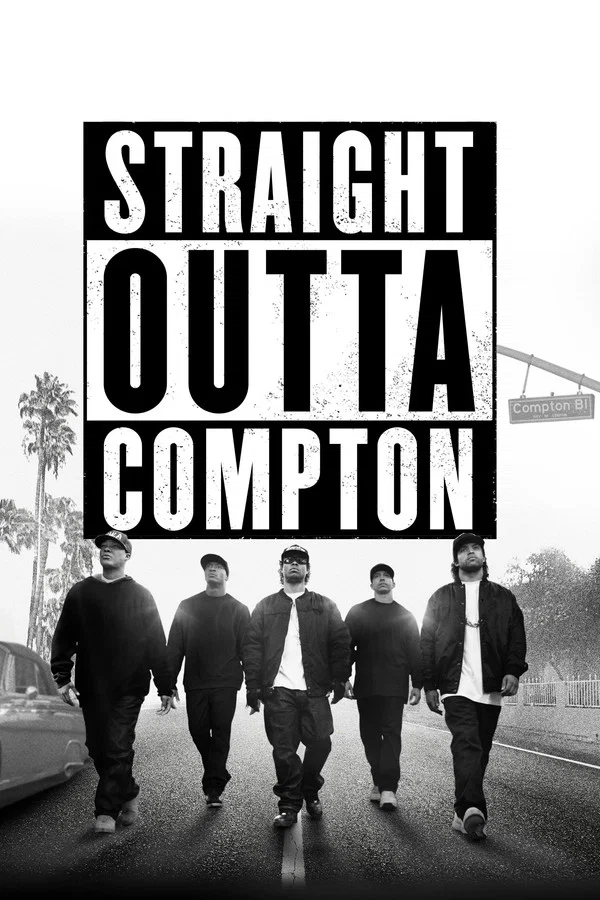
Straight Outta Compton chronicles the explosive rise of N.W.A. — Eazy-E, Dr. Dre, Ice Cube, MC Ren, and DJ Yella — from the streets of Compton to becoming one of the most influential and controversial acts in music history. The film captures the raw power of their music, their defiance against police brutality, and their clashes with the FBI and music industry.
Dramatizations & Historical Liberties
1. Omission of Dr. Dre’s violence against women
The film entirely ignores Dr. Dre’s well-documented history of physical abuse toward women, most notably the brutal 1991 beating of TV host Dee Barnes. This is a significant omission that whitewashes Dre’s character and avoids addressing the darker aspects of his past.
2. Major timeline compression and reordering of events
The movie heavily condenses the group’s most critical and chaotic years (roughly 1986–1995) into a much tighter narrative. Key developments such as Ice Cube’s departure, solo careers, and the bitter internal fallout are rushed, combined, or reordered for pacing.
3. Romanticized “unified crew” narrative
The film portrays N.W.A. as a loyal, tight-knit brotherhood that only fractured later due to external pressures. In reality, bitter power struggles, ego clashes, financial betrayals, and secret deals were present almost from the beginning and contributed heavily to the group’s early dissolution.
4. Simplified and dramatized group breakup
The breakup is presented as a relatively clean, dramatic split driven mainly by external forces. In reality, it was far messier, involving deep business disputes over money, management control, and personal betrayals that began years earlier.
5. Exaggerated “against all odds” origin story
The early days in Compton and the struggle to get signed are heavily dramatized to strengthen the inspirational underdog narrative. The film downplays some of the more exploitative business dealings, street-level realities, and internal compromises the group made along the way.
Related