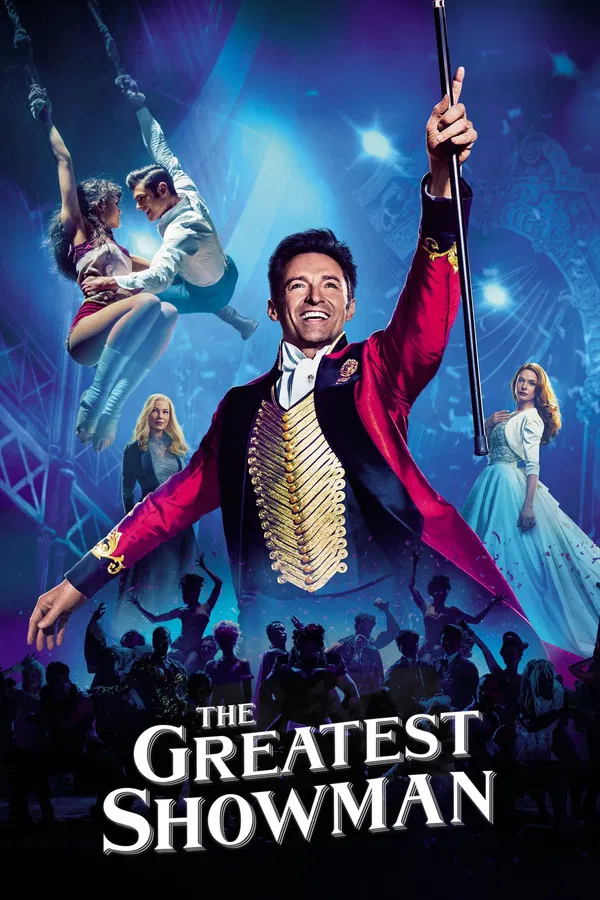
2017 • Hugh Jackman, Zac Efron
Summary
The Greatest Showman is a lavish musical that celebrates the life of P.T. Barnum. The film follows his ambitious rise from struggling tailor’s son to visionary showman, his creation of the famous circus, his discovery of extraordinary “oddities,” and his high-profile partnership with Swedish opera singer Jenny Lind.
Dramatizations & Historical Liberties
1. Heavily fictionalized early life and rise
The film portrays P.T. Barnum as a poor tailor’s son who rises from nothing through sheer vision and charisma. In reality, Barnum came from a relatively stable family, was involved in multiple shady businesses and hoaxes, and was already a well-known showman and con artist long before he created his famous circus.
2. Romanticized “freaks” and diversity message
The film presents Barnum’s circus as a progressive, inclusive haven that celebrated outsiders and misfits. In reality, Barnum often exploited performers with disabilities and medical conditions for profit, frequently using deceptive advertising and sensationalist — sometimes cruel — marketing tactics to attract audiences.
3. Fictional romance with Jenny Lind
The film creates significant dramatic tension through a near-romantic affair between Barnum and Swedish singer Jenny Lind. In reality, there is little to no historical evidence of any romantic involvement. Their relationship was strictly a business arrangement that ended badly due to financial disagreements.
4. Major timeline compression
The film compresses decades of Barnum’s life into a short, fast-paced story. Key events such as the creation of the American Museum, the circus, and his later career are merged and reordered for narrative convenience.
5. Overly inspirational and sanitized tone
The movie transforms Barnum — a complex, often ruthless showman and con artist — into a noble, misunderstood dreamer fighting for outsiders. It significantly downplays his lifelong pattern of deception, exploitation, and financial scandals.