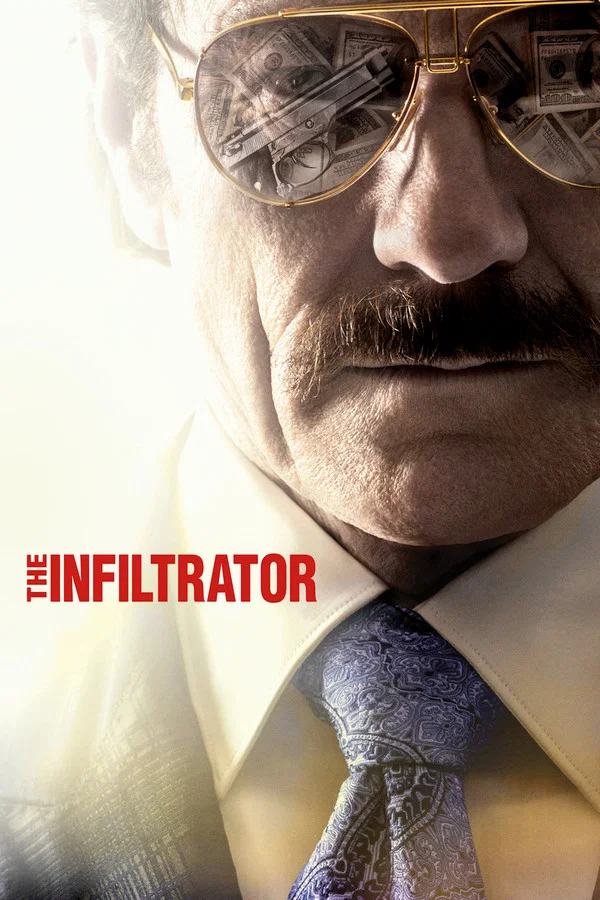
2016 • Bryan Cranston, Diane Kruger
Summary
The Infiltrator is a thriller based on the real-life undercover operation of U.S. Customs agent Robert Mazur. In the mid-1980s, Mazur infiltrates the Medellín Cartel’s financial network by posing as a sophisticated money launderer. Alongside his partner Kathy Ertz and informant Emir Abreu, he risks everything during Operation C-Chase to expose massive money laundering through major banks and bring down high-level cartel operatives..
Dramatizations & Historical Liberties
1. Timeline compression and operation pacing
The film condenses several years of painstaking undercover work, relationship building, and multiple smaller operations into a tighter, faster-paced narrative. In reality, Operation C-Chase involved long periods of waiting, bureaucratic hurdles, failed attempts, and gradual trust-building that spanned from 1986 to 1988.
2. Heightened personal danger and psychological toll
The film dramatically intensifies the constant threat to Robert Mazur and his family, with frequent close calls, mounting paranoia, and heavy emotional strain. While real danger existed, the movie amplifies the sense of immediate peril and anxiety to heighten suspense and emphasize the immense personal cost of his long-term undercover life.
3. Composite characters and merged events
Several supporting characters (including cartel intermediaries and corrupt bankers) are composites, and multiple real events are merged or rearranged. Key high-stakes meetings, money-laundering deals, and undercover confrontations are streamlined and dramatized to fit the narrative, even though the actual operation unfolded over several years with far more complex logistics.
4. The partnership and tension with Kathy Ertz
The film gives the professional relationship between Mazur and Kathy Ertz significant romantic tension and emotional weight. In reality, while they worked closely together, the personal/romantic dynamic is exaggerated to heighten the personal stakes of the undercover operation.
5. Climactic sting operation and takedowns
The movie depicts the final arrests and major sting operations with heightened cinematic intensity, faster pacing, and more explosive confrontations. In reality, the conclusion of Operation C-Chase was slower, more methodical, and involved careful coordination across multiple agencies and locations rather than rapid, high-drama takedowns.