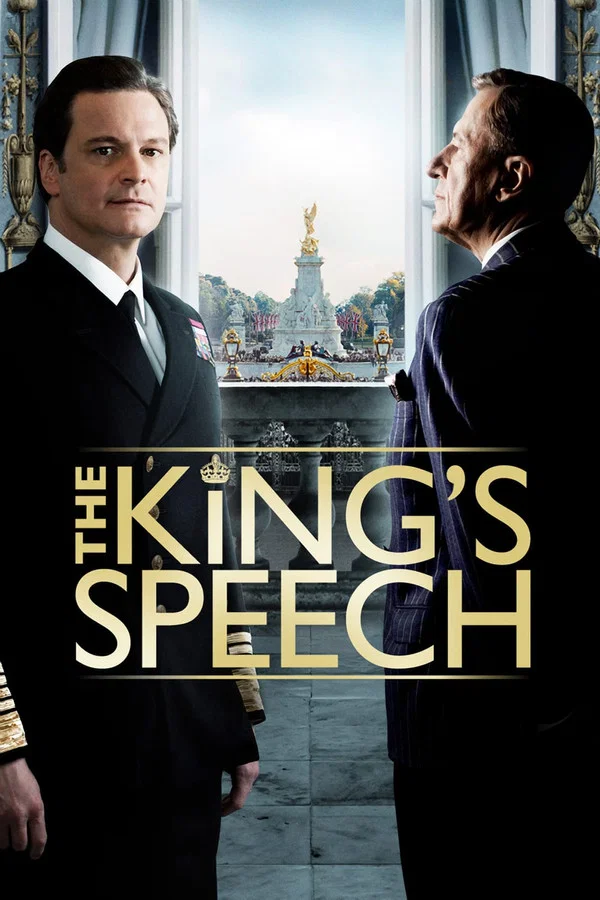
2010 • Colin Firth, Geoffrey Rush
Summary
The King's Speech tells the story of Prince Albert (Colin Firth), who reluctantly ascends the throne as King George VI after his brother Edward VIII abdicates. Plagued by a severe stammer that undermines his public duties, he seeks help from unconventional Australian speech therapist Lionel Logue (Geoffrey Rush). The film explores their unlikely friendship and the king’s determined effort to overcome his speech impediment as Britain faces the outbreak of World War II.
Dramatizations & Historical Liberties
1. Timeline of Logue’s treatment
The movie suggests therapy began in the early 1930s. In reality, Logue started working with Prince Albert in October 1926 — more than 13 years earlier — and significant improvements appeared within the first few months.
2. Severity of the stutter
The movie portrays a near-debilitating stammer in both public and private settings with sudden, cinematic breakthroughs. In reality, the stutter primarily affected public speaking; private conversations were much easier, and progress with Logue was steady rather than miraculous.
3. Winston Churchill’s stance on the abdication
The film includes several tense confrontations where Churchill strongly opposes Edward VIII’s abdication and criticizes the new king. In reality, Churchill was one of Edward’s most vocal supporters during the abdication crisis and remained loyal to him, even after he became Duke of Windsor.
4. Friendship with Logue
The movie depicts an almost instant, warm friendship between Prince Albert and Lionel Logue, with Logue casually addressing him as “Bertie” from early on. In reality, their relationship began as strictly professional and remained formal for many years. The use of first names developed slowly over time as trust grew.
5. Drama of the 1939 radio speech
The film portrays the 1939 Christmas radio broadcast as a sudden, high-stakes breakthrough after years of struggle. In reality, by 1939 George VI had been working with Logue for over 13 years and had already delivered several public addresses with steadily improving confidence. The speech was important, but not the dramatic “final test” moment the movie suggests.