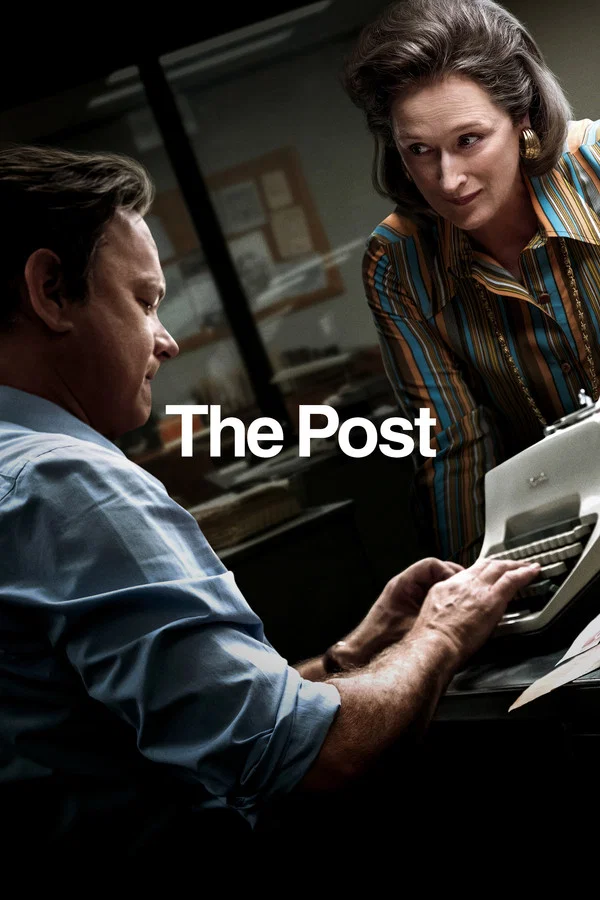
2017 • Tom Hanks, Meryl Streep
Summary
The Post tells the story of The Washington Post’s decision to publish the Pentagon Papers in 1971. Facing intense government pressure and legal threats, publisher Katharine Graham and editor Ben Bradlee must decide whether to risk the newspaper’s future by exposing decades of government deception about the Vietnam War.
Dramatizations & Historical Liberties
1. Significant timeline compression
The film condenses the frantic weeks in June 1971 — from the leak of the Pentagon Papers to the Supreme Court decision — into what feels like just a few intense days. In reality, the process involved prolonged legal uncertainty, multiple court battles at different levels, and extended internal debates at The Washington Post before the final ruling.
2. Personal drama around Katharine Graham
The movie dramatizes Graham’s internal struggle and transformation into a bold publisher with added emotional breakdowns, profound moments of doubt, and heightened personal stakes. While she did face a difficult and risky decision, her real process was more measured, supported by her board and editors, and less dramatically anguished than shown on screen.
3. The Washington Post as the lone hero
The film strongly implies The Washington Post was the primary courageous actor risking everything to publish the Papers. In reality, The New York Times had already published large portions of the documents first and faced the initial legal assault. The Post joined later and benefited from the precedent set by the Times.
4. Newsroom confrontations
Several heated arguments between editors, lawyers, and Graham are made more intense and theatrical than the actual, more measured decision-making process inside the newsroom. The real deliberations were serious but less overtly confrontational and dramatically charged than the film depicts.
5. Dramatized Nixon administration and Supreme Court scenes
The film heightens the confrontations with the Nixon administration and the urgency surrounding the Supreme Court case with added tension, dramatic confrontations, and a sense of immediate peril. In reality, the legal battle was more procedural, technical, and bureaucratic, involving lengthy briefs, court hearings, and strategic deliberations rather than the cinematic showdowns shown on screen.