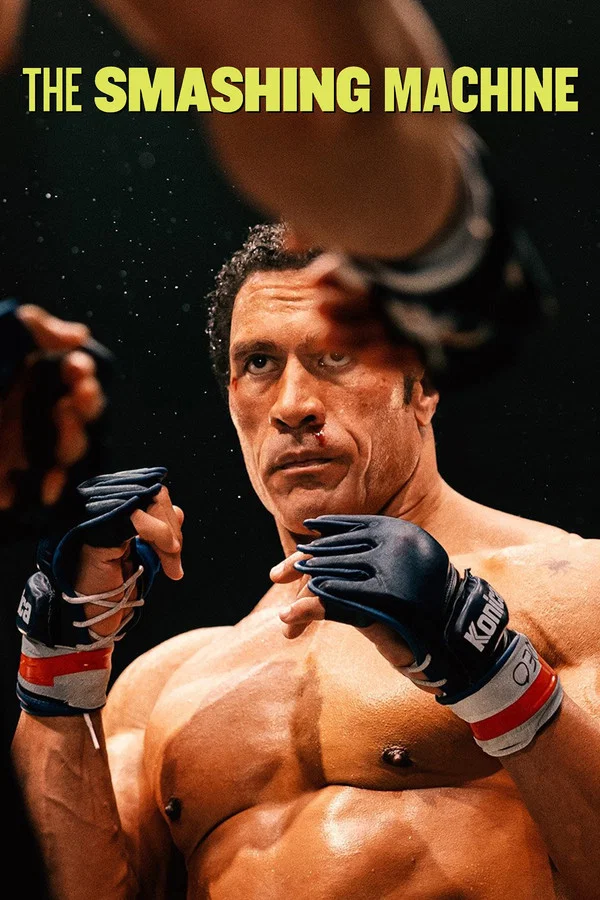
2025 • Dwayne Johnson, Emily Blunt
Summary
The Smashing Machine tells the story of Mark Kerr, a dominant and terrifying force in the early days of mixed martial arts, who achieved major success in the UFC and PRIDE before his career and life were derailed by severe addiction.
Dramatizations & Historical Liberties
1. Altered and composite personal relationships
The film heavily dramatizes several key relationships, especially with his girlfriend Dawn and longtime training partner Mark Coleman. Multiple emotional arguments, intimate confrontations, and support scenes involving Coleman were invented or relocated to moments where he was not actually present, creating heightened drama that did not occur in real life.
2. Speed and severity of addiction
The movie depicts a rapid, almost continuous descent filled with frequent rock-bottom crises and severe physical/mental breakdowns. In reality, Kerr’s addiction to painkillers (stemming from fight injuries) developed more gradually, with periods of functionality and intermittent success before the full collapse, including his well-documented 1999 overdose.
3. Redemptive post-peak life
The film concludes on a relatively hopeful, redemptive note suggesting meaningful recovery. In reality, Kerr faced repeated relapses, serious ongoing health complications, multiple legal troubles, and profound personal struggles for many years after his fighting career ended around 2000–2009. His path to long-term sobriety was far more difficult and prolonged.
4. Scene inventions
Specific dramatic moments were changed for emotional or visual impact — most famously, the film shows Dawn smashing a Japanese bowl during a fight; in reality she destroyed an expensive silk robe.