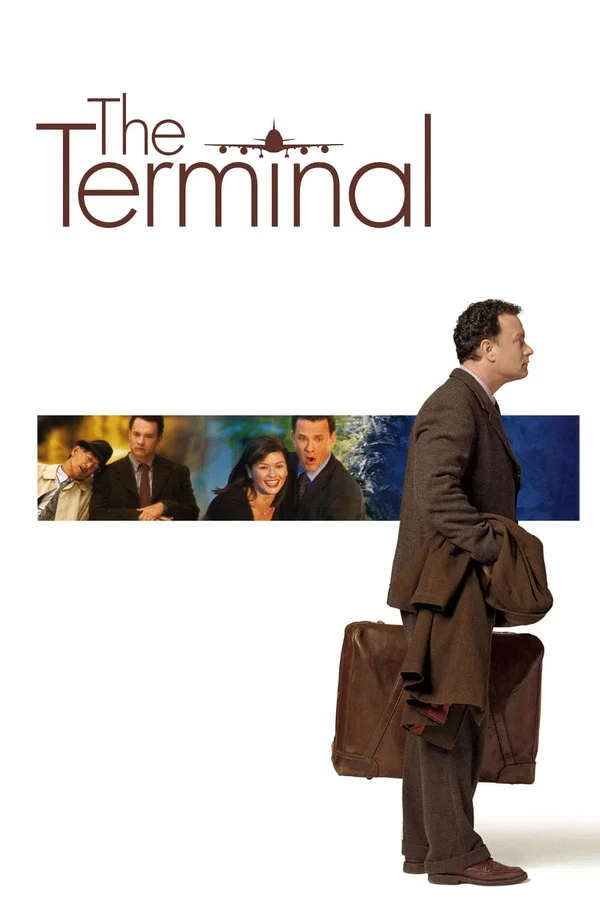
2004 • Tom Hanks
Summary
The Terminal follows Viktor Navorski, a traveler from the fictional country of Krakozhia, who becomes stranded in New York’s JFK Airport after his homeland collapses in a coup. Unable to enter the United States or return home, he lives in the terminal for months, forming friendships and navigating bureaucracy while waiting for his situation to be resolved.
Dramatizations & Historical Liberties
1. Completely fictionalized main character and country
The story is loosely inspired by Mehran Karimi Nasseri, an Iranian man who lived in Charles de Gaulle Airport in Paris for 18 years. The film changes the setting to JFK, makes Viktor a cheerful Eastern European, invents an entire fictional country (Krakozhia), and turns the story into a light-hearted comedy-drama.
2. Major changes to the real man’s situation
Nasseri was stateless due to a bureaucratic and political nightmare and suffered from severe mental health issues. The film transforms this into a whimsical, feel-good tale of a charming, optimistic man who makes friends and finds romance in the airport.
3. Romantic subplot and light-hearted tone
The central romance between Viktor and flight attendant Amelia is entirely invented. The film adopts a light-hearted, whimsical, and comedic tone that is very different from the lonely, often depressing reality of Mehran Karimi Nasseri’s nearly 18 years of isolation in the airport.
4. Dramatized airport bureaucracy and resolution
The bureaucratic obstacles and eventual resolution are heavily simplified and dramatized for emotional payoff. Nasseri’s real situation lasted nearly two decades with no clean, satisfying Hollywood ending.