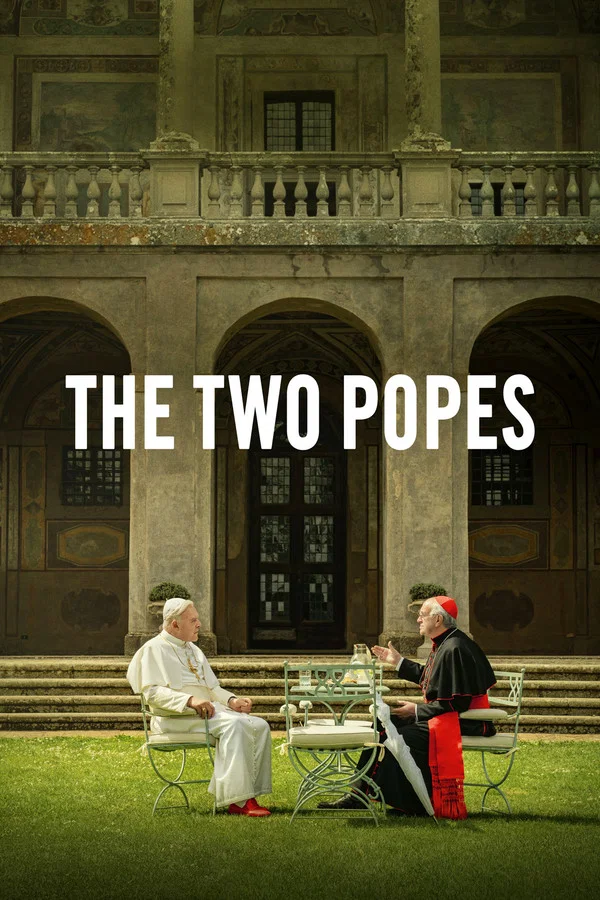
2019 • Anthony Hopkins, Jonathan Pryce
Summary
The Two Popes dramatizes the relationship between Pope Benedict XVI and Cardinal Jorge Bergoglio. The film explores their contrasting personalities and ideologies as Benedict considers resigning amid Church scandals, leading to the historic 2013 papal transition and the election of the first Latin American pope.
Dramatizations & Historical Liberties
1. Private conversations at Castel Gandolfo
The film is built around numerous long, deeply personal, and theologically rich conversations between Pope Benedict XVI and Cardinal Jorge Bergoglio. Almost all of these intimate dialogues — including their candid discussions about faith, power, guilt, and the future of the Church — were invented or heavily imagined by the screenwriter. In reality, their actual meetings were limited, formal, and far less revealing.
2. Benedict’s personal crisis of faith and guilt
The movie portrays Pope Benedict as a deeply tormented, guilt-ridden man haunted by the Church’s scandals and questioning his own legacy as he considers resignation. While Benedict did carry significant burdens and eventually chose to step down, the intense emotional anguish, self-doubt, and dramatic personal crises shown on screen are significantly amplified for dramatic effect.
3. Bergoglio’s reluctance and internal conflict
The movie portrays Pope Benedict as a deeply tormented, guilt-ridden man haunted by the Church’s scandals and questioning his own legacy as he considers resignation. While Benedict did carry significant burdens and eventually chose to step down, the intense emotional anguish, self-doubt, and dramatic personal crises shown on screen are significantly amplified for dramatic effect.
4. Timeline compression of the resignation and conclave
The film compresses the complex sequence of events surrounding Pope Benedict’s resignation, the sede vacante period, and the 2013 papal conclave into a much tighter and dramatically convenient timeline. The real institutional, political, and procedural process was significantly more drawn-out, bureaucratic, and complicated than the streamlined narrative suggests.
5. Simplification of theological and institutional debates
Complex and nuanced issues — including the clerical sexual abuse crisis, Vatican financial scandals, the tension between tradition and reform, and the Church’s role in the modern world — are distilled into accessible, emotionally charged dialogues between the two men. In reality, these debates involved many more stakeholders, deeper historical context, longstanding institutional resistance, and far greater complexity than the film presents.