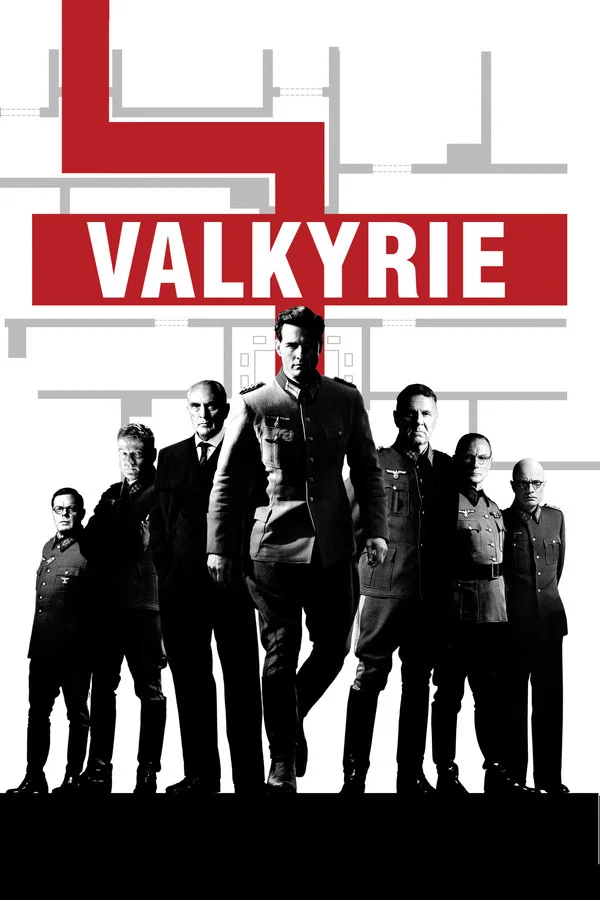
2008 • Tom Cruise, Kenneth Branagh
Summary
Valkyrie tells the story of the July 20, 1944, plot to assassinate Adolf Hitler. The film follows Colonel Claus von Stauffenberg and a group of high-ranking German officers who devise an elaborate plan to kill Hitler, seize control of the government, and end the war before Germany is completely destroyed.
Dramatizations & Historical Liberties
1. Timeline of the July 20 plot
The film compresses months of careful planning, multiple failed assassination attempts, and internal debates into a tight, fast-paced narrative that unfolds over just a few days. In reality, the conspiracy was a long, agonizing process involving shifting participants, repeated cancellations due to Hitler’s schedule changes, and deep hesitation among senior officers before the final attempt on July 20, 1944.
2. Portrayal of Claus von Stauffenberg
Tom Cruise’s depiction of Stauffenberg presents him as an almost flawless moral hero — decisive, charismatic, and unwavering from the beginning. While he was undeniably courageous, the real von Stauffenberg was more complex: he had initially supported parts of the Nazi regime and only turned against Hitler after witnessing the horrors on the Eastern Front. His transformation was more gradual and conflicted than the film shows.
3. Heavily altered private conversations
Many of the film’s most dramatic and emotionally powerful dialogues between the conspirators were invented or significantly rewritten by the screenwriters. In reality, the plotters had to speak in coded language and very cautiously due to constant fear of Gestapo surveillance, making their actual conversations far more fragmented, guarded, and less cinematic than those portrayed on screen.
4. Mechanics of the bomb plot and coup
The film streamlines the enormous logistical and technical challenges of planting the bomb and launching the coup. In reality, the operation was plagued by bad luck, communication breakdowns, conflicting orders, and poor coordination across military commands — problems the movie condenses or downplays to maintain suspense and clarity.
5. Sense of near-success and dramatic tension
The movie creates a stronger impression that the plot had a realistic chance of succeeding and dramatically changing the course of the war. In reality, even if Hitler had been killed, the broader military situation, the deep entrenchment of the Nazi regime, and the overwhelming power of the SS made a successful coup and negotiated peace highly unlikely.