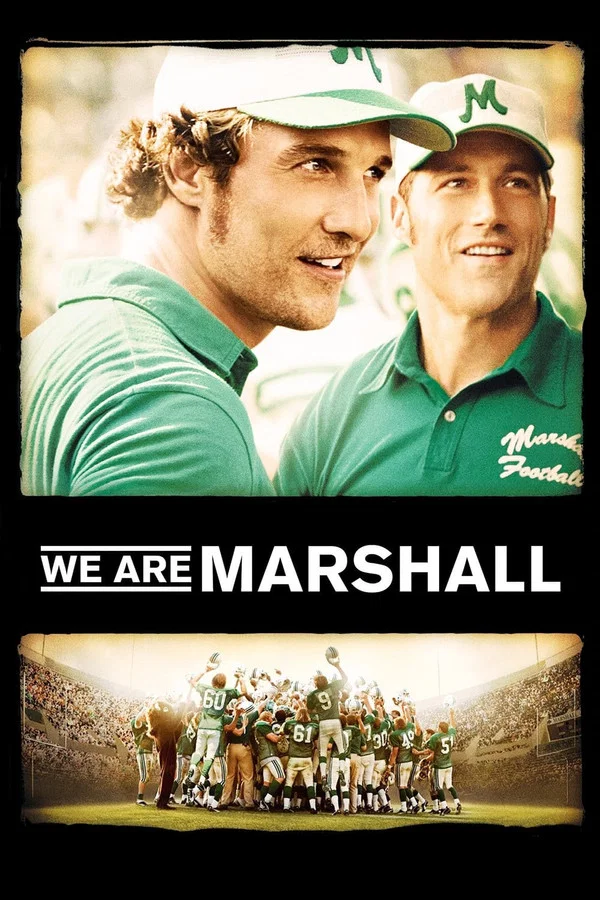
2006 • Matthew McConaughey, Matthew Fox
Summary
We Are Marshall tells the story of the 1970 Marshall University plane crash that killed 75 people, including most of the football team, and the university’s courageous decision to rebuild the program from scratch under new coach Jack Lengyel.
Dramatizations & Historical Liberties
1. Timeline compression and healing arc
The film compresses the long, painful rebuilding process after the November 1970 crash and presents a smoother, more linear path to emotional recovery and triumph. In reality, the recovery was slower, messier, and emotionally complex, with deeper, longer-lasting grief and no neat, uplifting resolution for many involved.
2. Lengyel’s motivational leadership
Coach Lengyel delivers several memorable, quotable speeches (“This is your opportunity to rise from the ashes,” “Play for those who can’t”). While Lengyel was inspirational, most of these dramatic locker-room moments were invented or heavily dramatized.
3. Red Dawson’s survivor’s guilt
Dawson’s emotional arc is significantly intensified with isolation, brooding, and visible breakdowns. While he carried real guilt for missing the flight, the film amplifies his personal torment for dramatic weight.
4. Composite players and team dynamics
Most young players are fictional composites. Characters like Chris “Muff” Mullin and several freshmen have invented personal stories, friendships, and motivations created to represent the team’s collective grief.
5. The first game back and emotional climax
The film portrays the 1971 home opener against Xavier with thunderous crowds, symbolic gestures, and intense emotion. In reality, the 1971 game against Xavier was far more subdued, emotionally heavy, and muted due to the overwhelming grief still surrounding the program.