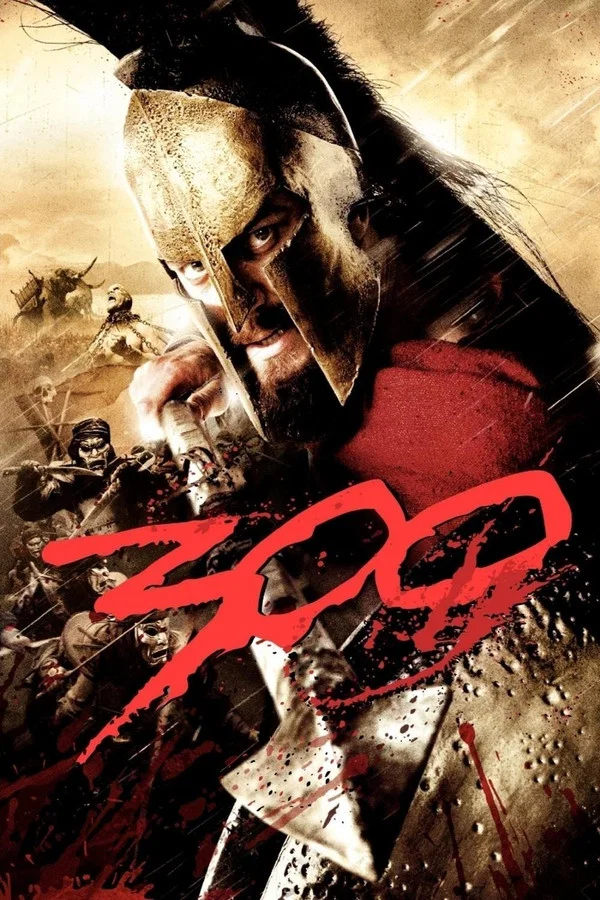
2006 • Gerard Butler, Lena Headey
Summary
300 depicts the Battle of Thermopylae in 480 BC, where King Leonidas and 300 Spartans made a legendary last stand against a massive invading Persian army led by King Xerxes.
Dramatizations & Historical Liberties
1. Exaggerated Persian army and fantasy elements
The film shows Xerxes commanding a supernatural army of hundreds of thousands, complete with masked immortals, war rhinos, elephants, and monsters. In reality, the Persian force was large (estimates range from 100,000–200,000), but these fantastical creatures and scale were pure invention for visual spectacle.
2. Distortion of Spartan society
Sparta is portrayed as a pure, noble warrior paradise with no politics or flaws. In reality, it was a brutal slave society reliant on helot labor, had a complex political system with two kings and a council, and Leonidas faced real political opposition before committing to the battle.
3. Fictionalized traitor Ephialtes
The film turns Ephialtes into a deformed Spartan who is rejected and then betrays his people. In reality, he was a local Malian shepherd motivated by reward money. He was not Spartan, not deformed in any notable way, and had no personal rejection storyline.
4. Last stand and “300 to the last man” narrative
The film shows the 300 dying heroically to the very last man in a final glorious charge. Historically, Leonidas sent away most Greek allies before the end. Roughly 300 Spartans plus a few hundred Thespians and Thebans remained and were wiped out. The “last stand” was smaller and less cinematic.
Related