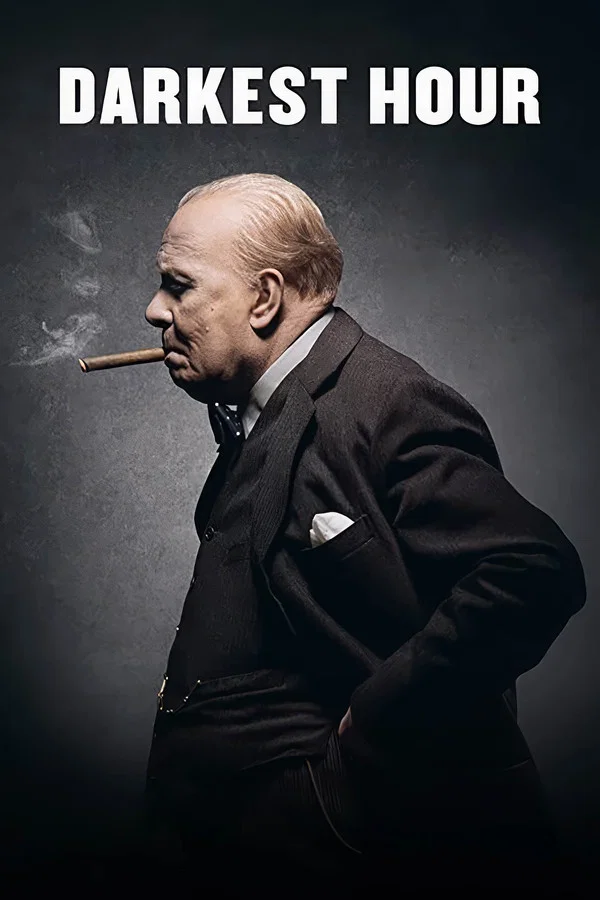
2017 • Gary Oldman, Kristin Scott Thomas
Summary
Darkest Hour is a political drama set in May 1940. As Nazi Germany conquers Europe and the British Expeditionary Force is trapped at Dunkirk, Winston Churchill (Gary Oldman) is appointed Prime Minister at age 65. The film follows his turbulent early weeks as he battles War Cabinet members who favor negotiating peace with Hitler, while grappling with self-doubt and the enormous responsibility of leading Britain through its darkest hour.
Dramatizations & Historical Liberties
1. The London Underground scene
The memorable scene where Churchill rides the London Underground and directly asks ordinary citizens whether Britain should fight on is almost entirely fictional. While it serves as a powerful dramatic device to show public resolve, there is no historical record of Churchill ever taking the Tube during this period or conducting such a spontaneous poll with the public.
2. Churchill’s personal doubts and emotional lows
Gary Oldman’s portrayal includes deeper moments of hesitation, depression, and vulnerability (including scenes of him crying or questioning himself) than historical evidence supports. While Churchill did face anxiety, these private emotional breakdowns are dramatized for effect.
3. War Cabinet confrontations
The film makes the fierce debates with Lord Halifax and Neville Chamberlain more personal, theatrical, and emotionally charged, with raised voices and dramatic confrontations. In reality, the War Cabinet meetings were serious, tense, and highly formal, but significantly less theatrical and emotionally explosive than portrayed on screen.
4. Relationship with King George VI
The film portrays King George VI’s support for Churchill as warm and personally encouraging from the very beginning. In reality, their relationship started more formally and with some initial reservations on the King’s part. The King’s trust and friendship with Churchill grew gradually over the course of the war as they worked closely together through Britain’s darkest days.
5. Overall heroic framing
The film presents Churchill as a more consistently bold and visionary leader from the moment he takes office. In reality, his position was precarious, and his famous defiant stance developed gradually amid intense opposition.
Related