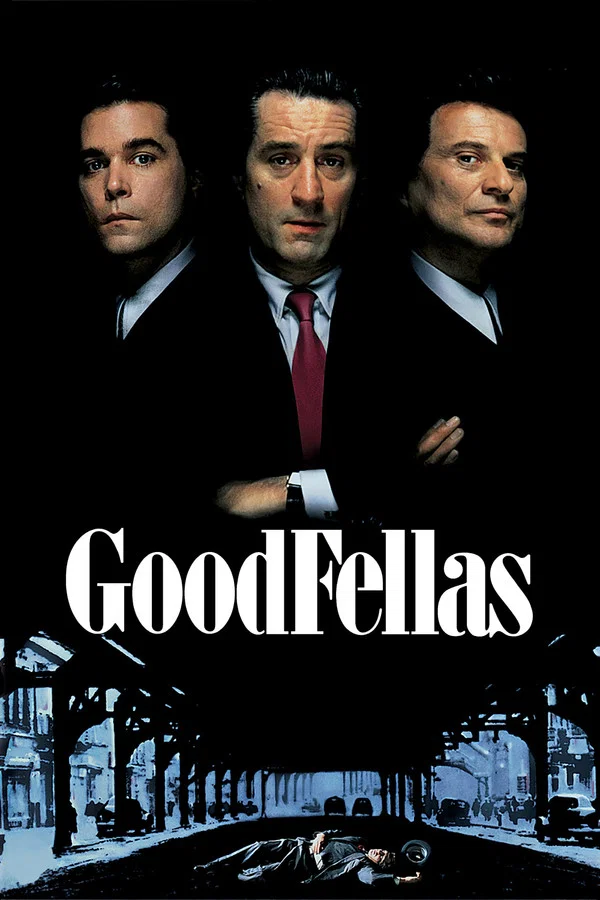
1990 • Robert De Niro, Ray Liotta, Joe Pesci
Summary
Goodfellas follows Henry Hill’s life inside the Lucchese crime family — from his teenage fascination with the mob in 1950s Brooklyn to his rise through the ranks, involvement in major heists like the Lufthansa robbery, drug dealing, and his eventual decision to become an FBI informant after years of paranoia and violence.
Dramatizations & Historical Liberties
1. The Lufthansa heist and its brutal aftermath
The film condenses the planning and execution of the $6 million Lufthansa heist and depicts a rapid, almost immediate wave of brutal murders in retaliation. In reality, the heist was far more disorganized and chaotic than shown, and the subsequent killings occurred over a longer period of time, driven by complex personal grudges, paranoia about snitches, and disputes over the division of the stolen money.
2. The murder of Billy Batts
The savage beating and burial of made man Billy Batts is portrayed as a sudden, explosive outburst triggered by an argument. In reality, the murder was more premeditated: Tommy DeSimone, Jimmy Burke, and others planned the killing in advance after Batts disrespected Tommy. The body disposal was significantly messier and took longer than shown, involving multiple attempts to hide the remains.
3. Major timeline compression of Henry’s criminal career
The movie compresses decades of crimes, arrests, drug dealing, and personal relationships into a much tighter narrative arc spanning roughly 25 years. In reality, Henry Hill’s life in the mob involved many smaller scams, side deals, betrayals, and escalating paranoia that unfolded over a significantly longer period, with more gradual rises and falls than the fast-paced film depicts.
4. Henry’s final days and witness protection reality
The film depicts a sudden, dramatic break after a cocaine-fueled paranoia spiral. In reality, Henry’s cooperation with the FBI developed more gradually after multiple arrests and threats, and his years in witness protection involved significant personal decline, ongoing drug issues, financial struggles, and regret.
5. The “funny how?” restaurant scene
The iconic confrontation in which Tommy asks Henry “Funny how?” is based on a real incident involving Tommy DeSimone’s volatile temper. However, the film heightens the timing, intensity, and the sudden shift from laughter to menacing threat to create one of the most memorable and tension-filled moments in the movie.
Related