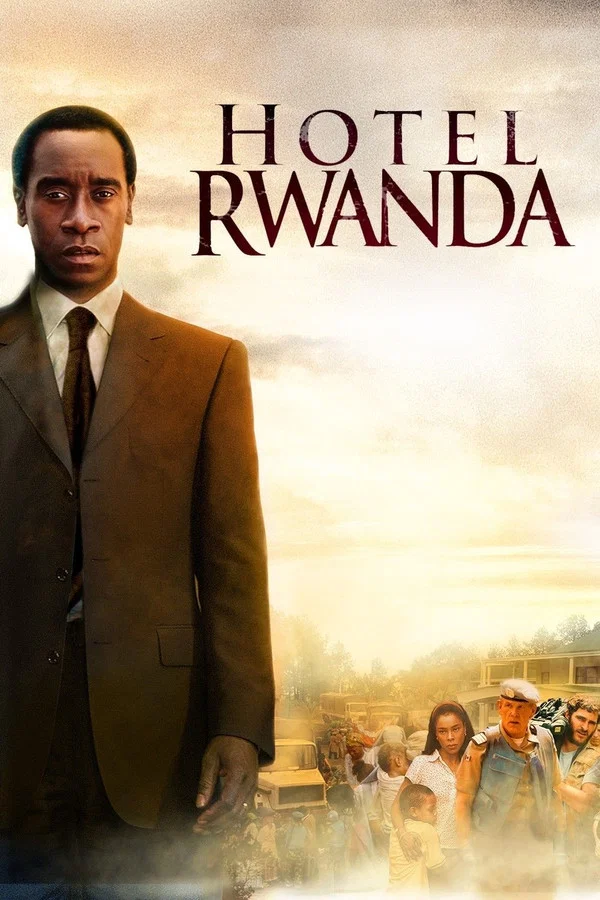
2004 • Don Cheadle, Sophie Okonedo
Summary
Hotel Rwanda tells the powerful true story of Paul Rusesabagina, a hotel manager who, during the 1994 Rwandan Genocide, used his influence, connections, and courage to shelter more than 1,200 Tutsi refugees at the Hôtel des Mille Collines in Kigali. Facing unimaginable horror, Paul bribed and negotiated with militia leaders while the international community largely abandoned the country.
Dramatizations & Historical Liberties
1. Rapid escalation and overnight descent into genocide
The film shows the violence erupting almost immediately after the president’s assassination. In reality, while the killing started quickly, the full-scale, organized genocide had been planned for months with extensive propaganda and militia preparation.
2. Heightened personal family drama and moral dilemmas
Paul’s arguments with his wife Tatiana and his internal conflict about risking his family are intensified with more emotional, tearful confrontations. In reality, the pressure was constant and grinding over the 100-day genocide, with many quieter moments of fear, endurance, and difficult decisions made under extreme stress rather than frequent dramatic outbursts.
3. Dramatic negotiations and confrontations with militia leaders
Several tense phone calls and face-to-face standoffs with Interahamwe leaders are given heightened drama and clearer moral victories. In reality, many of these negotiations were far more drawn-out, bureaucratic, and exhausting. Paul often had to make repeated bribes, use personal connections, and engage in long, tense bargaining sessions over weeks to protect the people sheltering at the hotel.
4. The UN convoy and refugee evacuation scenes
The dangerous roadblock standoffs and evacuation attempts are made more immediate and heroic. While real threats and terrifying encounters at checkpoints occurred almost daily, many of the most cinematic, high-tension confrontations shown were combined from multiple incidents or amplified for dramatic effect to emphasize Paul’s courage and quick thinking under extreme pressure.
5. Western journalists and media coverage
The film dramatizes the arrival of foreign journalists and their relatively quick departure to heighten the contrast between Western indifference and the horror unfolding at the hotel. In reality, international media coverage of the Rwandan genocide was extremely limited and slow to develop. Most journalists stayed only briefly, and the world remained largely unaware or unresponsive to the scale of the mass killings for weeks.
Related