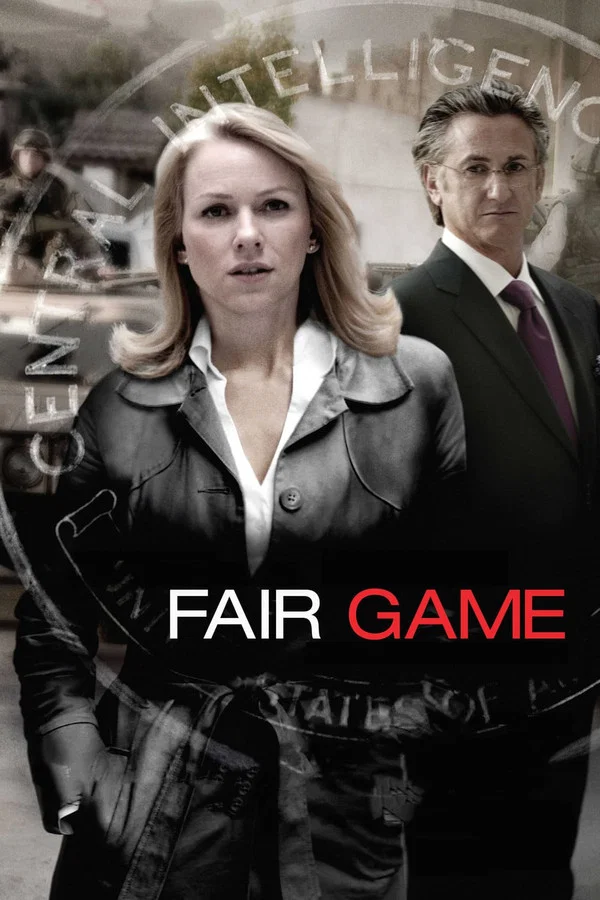
2010 • Naomi Watts, Sean Penn
Summary
Fair Game tells the story of Valerie Plame Wilson, a covert CIA officer, and her husband, Ambassador Joseph Wilson. After Wilson publicly contradicted the Bush administration’s claim that Iraq was buying uranium from Niger, White House officials leaked Plame’s classified identity in retaliation. The film follows the devastating fallout: the end of Plame’s career, death threats, and the couple’s fight to expose the leak.
Dramatizations & Historical Liberties
1. Timeline compression and narrative pacing
The film condenses the multi-year saga — from Wilson’s 2002 Niger trip to the 2003 leak, the grand jury investigation, and Scooter Libby’s trial — into a more streamlined two-hour story. Real events involved far more legal maneuvering, delays, and bureaucratic layers.
2. Heightened marital conflict and personal drama
The emotional strain on the Wilson-Plame marriage is amplified with more explosive arguments and personal crises to heighten dramatic tension. While the real pressure was immense, the film intensifies certain private moments for cinematic impact.
3. Portrayal of White House officials and internal deliberations
The film shows Vice President Dick Cheney, Scooter Libby, Karl Rove, and other senior officials in private meetings and conversations as they discuss and ultimately approve the leak of Valerie Plame’s identity. These scenes are based on public records and testimony, but much of the dialogue and specific interactions are dramatized or imagined by the filmmakers to convey the political intent and atmosphere of retaliation.
4. Valerie Plame’s covert operations work
The film depicts aspects of Plame’s undercover CIA career, especially her work on counter-proliferation and weapons of mass destruction intelligence. In reality, her assignments were far more complex, compartmentalized, and highly classified than portrayed. The movie simplifies and dramatizes these elements both for security reasons and to make her secretive world accessible to a general audience.
5. Intensity of public backlash and threats
Media frenzy, death threats, and social isolation are portrayed with heightened urgency to convey the human cost. The real experience was deeply traumatic but unfolded over a longer period with varying levels of intensity.
6. Moral framing and resolution
The film strongly frames the leak as a clear abuse of power and presents the couple’s fight as a principled stand for truth. It reflects Plame and Wilson’s perspective while simplifying some ongoing debates surrounding the Niger uranium intelligence.
Related